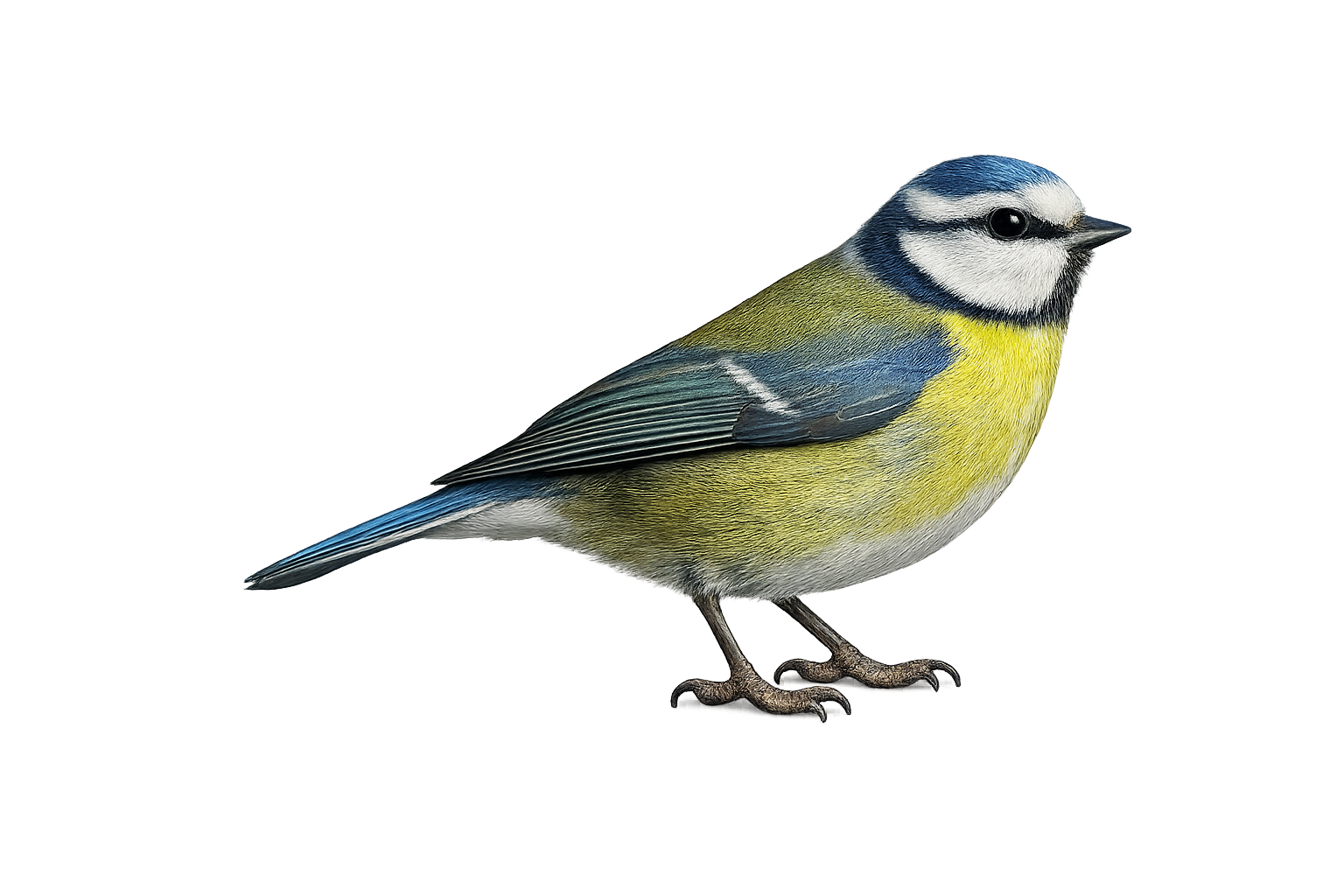
A tiny burst of colour and energy, the Eurasian Blue Tit is one of the UK’s most familiar and charismatic garden birds. Instantly recognisable by its bright cobalt-blue crown, white cheeks, and lemon-yellow breast, this agile little acrobat is rarely still for long.
Blue Tits are highly active and inquisitive, often seen hanging upside down from branches, feeders, and seed heads as they search for food. Their diet changes with the seasons — insects and caterpillars in spring and summer, then seeds, nuts, and garden feeders through autumn and winter.
They are bold, intelligent, and surprisingly adaptable, thriving in woodlands, parks, hedgerows, and suburban gardens. Their high-pitched, rapid calls and cheerful song make them easy to detect even when hidden among foliage.
During the breeding season, Blue Tits nest in tree cavities and nest boxes, laying large clutches of up to 12 eggs. Both parents work tirelessly to feed their chicks, often making hundreds of feeding trips a day.
Despite their small size, Blue Tits play an important ecological role by helping to control insect populations — particularly caterpillars that would otherwise damage trees.
A true favourite among birdwatchers and gardeners alike, the Blue Tit is a symbol of lively woodland life and a regular highlight of any wildlife sighting.